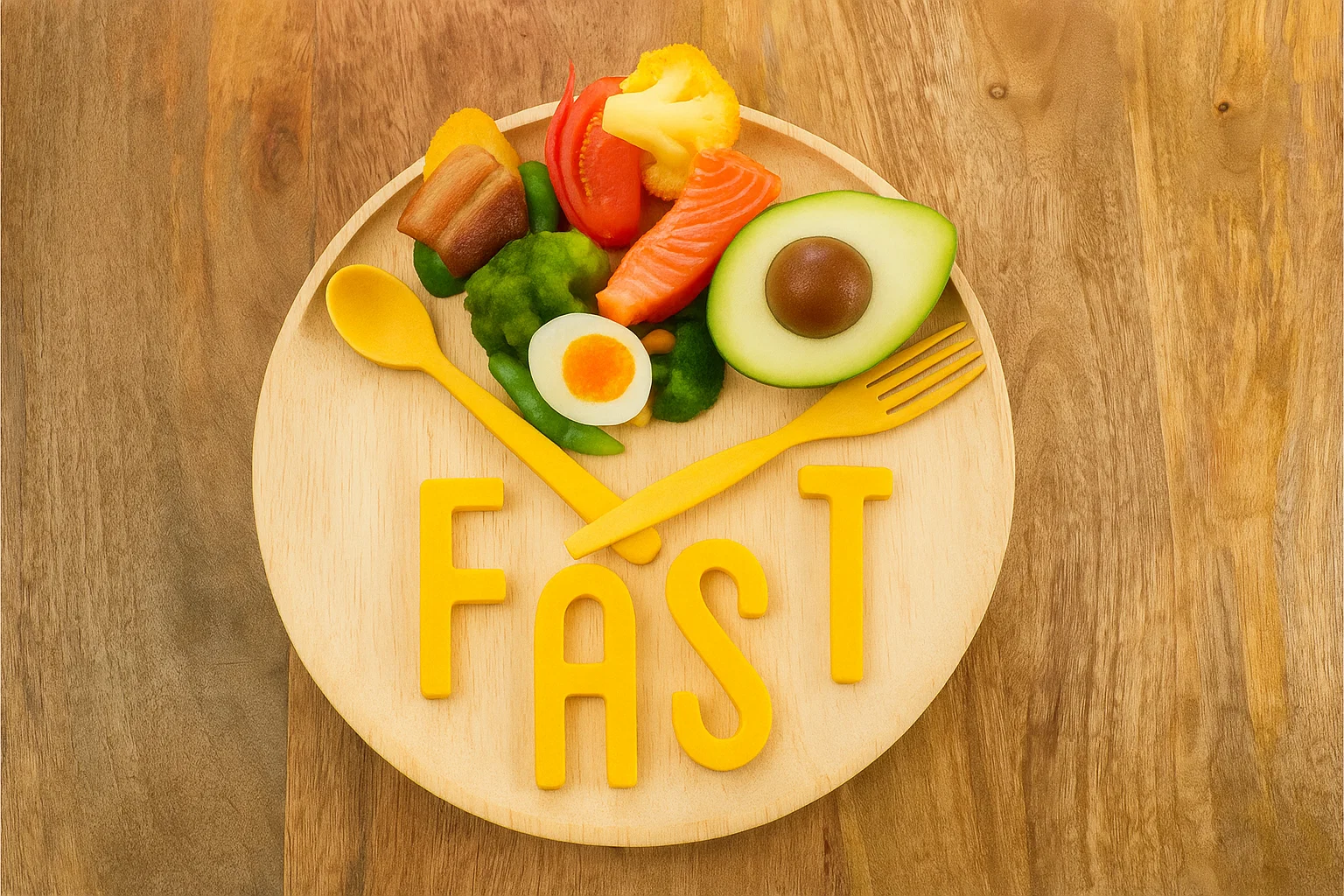
so what is intermittent fasting? also known as time restricted eating intermittent fasting is when you choose to eat your meals within a specific time window throughout the day and then for the rest of the day you are not eating at all, so you’re not consuming any type of calories or any type of energy which is why we call it fasting. Intermittent fasting is not a form of caloric restriction in the traditional sense, as it doesn’t focus on eating less but rather on eating less frequently. That said, many people naturally end up consuming fewer calories simply because they have a shorter window of time to eat during the day. However, this isn’t the case for everyone, and it’s important to note that intermittent fasting isn’t technically a diet. because again the focus is on the eating window not so much the food but I do think it’s important to note that the type of food you eat can make your fast feel easier or more difficult
Why Fast?
People typically try intermittent fasting for two primary reasons: to lose weight or to enjoy the various health benefits linked to this eating pattern. so the first one is that it lowers insulin levels now if you’re not familiar with insulin it is sometimes called called the transport hormone and that is because whenever you eat anything your blood sugar Rises also known as glucose when you have glucose in the blood insulin is released to transport that glucose or that blood sugar to the liver to the muscles then eventually to Fat stores
When insulin levels are high, the body stops burning fat a process known as lipolysis which is why insulin is often called the storage hormone. Elevated insulin prevents the body from using stored fat for energy. However, when insulin levels drop, such as during fasting, the body can then tap into its fat reserves for fuel. This is why many people use intermittent fasting as an effective strategy to help with weight loss.
Another health benefit is an increase in growth hormone Now growth hormones help to support skeletal muscle and as many of us know as we become older wiser and more fabulous maintaining healthy skeletal muscle is very important for good health and for longevity and it can also really support weight loss goals because the more lean muscle mass you have on your body the more calories the more energy your body is going to burn.
Another incredible benefit of intermittent fasting is a process called autophagy, autophagy is a cellular process where the cells are able to break down and recycle their own damaged components which allows them to get rid of any debris and maintain cellular health and cellular function this plays a crucial role in overall health protecting against diseases and supporting longevity. but do keep in mind that in order to reap the rewards of autophagy you need to be fasted somewhere between 14 and 17 hours depending on which expert you follow.
Another benefit is gut health fasting allows your body to turn on a gut cleansing process called the migrating Motor complex now this is a pattern of rhythmic contractions in both the small intestines and the stomach that allows the system to push out undigested food and bacteria and this keeps your gut feeling very happy and healthy. Fasting has been linked to reduced inflammation, better heart health, and enhanced brain function, offering numerous potential benefits. Given these advantages, it may be worth trying intermittent fasting if you’re curious about how it could work for you.
Common Types of Intermittent Fasting
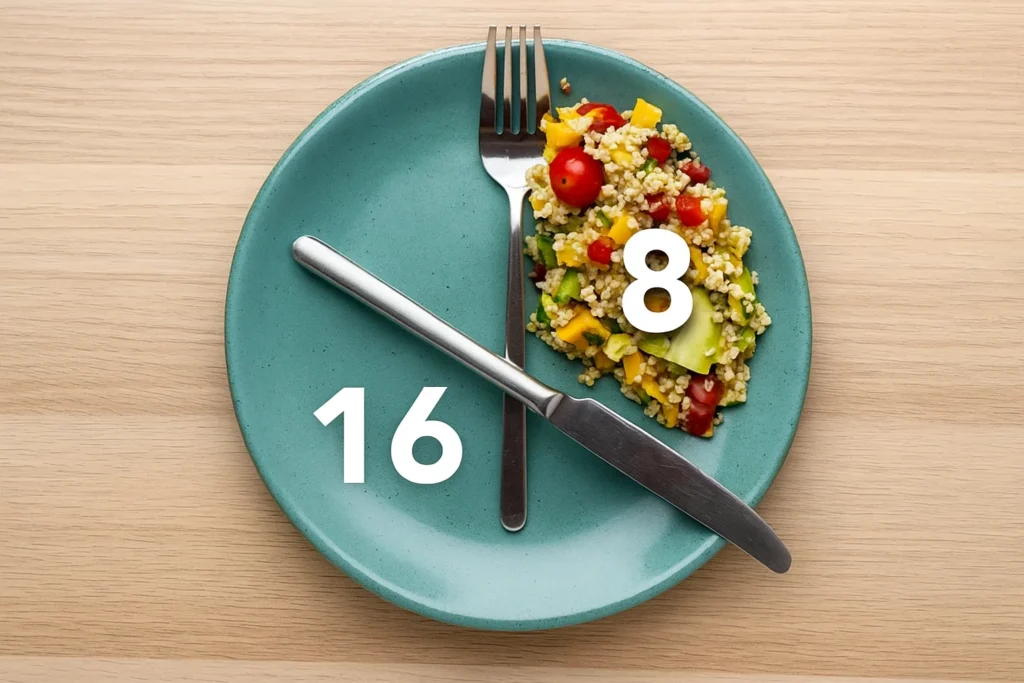
There’s no one best way to fast. Your schedule, lifestyle, and goals will shape what works for you. Here are some popular methods:
1. 16:8 Method
Fast for 16 hours, eat during an 8-hour window. Many people skip breakfast and eat between 12 p.m. and 8 p.m. It’s a simple starting point and one of the most common approaches.
2. 14:10 Method
A gentler version of 16:8. You fast for 14 hours, eat during a 10-hour window. Good for beginners or those with lighter activity levels.
3. 5:2 Diet
Eat normally five days a week. On the other two days (non-consecutive), limit yourself to about 500–600 calories.
4. Alternate-Day Fasting
Fast every other day. Some people eat a small meal on fasting days, others skip food completely. It’s more intense and not ideal for everyone.
5. One Meal a Day (OMAD)
Fast for 23 hours, eat one large meal within a one-hour window. This is an extreme approach and tough to maintain definitely not for beginners.
6. Eat-Stop-Eat
Fast for 24 hours once or twice a week. For example, stop eating after dinner one night and don’t eat again until dinner the next day.
How Long Should You Fast?

There’s no one size fits all fasting window. What’s ‘best’ depends on your goals and how long you should fast for. There are different fasting windows within a 24-hour period usually, you will see people fasting anywhere between 12 to 22 hours. But technically, any period of time when you’re not eating is considered a fast. Sometimes, we have to assess where we are and then build from there. Often, what you will see and what most experts recommend to the average person who is new to intermittent fasting is to aim somewhere between 12 and 16 hours.
So, what you would want to do is work your way up to 12 hours and then, slowly but surely, add an extra hour until you can comfortably get to 16 hours or whatever fasting window feels like the right balance for you. The easiest way to determine your fasting window is to think about what time you like to eat your last meal of the day and then work backward. For example, if you like to eat dinner at 7:00 p.m., then you would not eat again until 7:00 a.m. the next day. If desired, you can slowly build from there maybe the next day you wait till 8:00 a.m., then a few days later you go till 9:00 a.m., and eventually, you get to 10:00 a.m.
But here’s a pro tip: No matter what you do, always include your sleeping hours in your fast time because that’s going to make fasting a whole lot easier.
Tips to Start Intermittent Fasting

If you want to try fasting, ease into it:
1. Start Small
Don’t go straight to 16 or 24-hour fasts. Begin with 12 hours and add time slowly.
2. Stay Hydrated
Drink plenty of water. Black coffee and tea are fine, but skip sweeteners, milk, and creamers.
3. Don’t Overeat
It’s tempting to load up when your eating window opens, but focus on balanced meals with protein, healthy fats, fiber, and complex carbs.
4. Pay Attention to Your Body
If you feel dizzy, weak, or irritable, your fast may be too long. Cut back or eat a small healthy snack.
5. Stick to a Routine
Like any habit, fasting works best with consistency. Find a rhythm that fits your schedule and energy levels.
6. Know When to Skip It
Fasting isn’t right for everyone. If you’re pregnant, breastfeeding, managing certain health conditions, or have a history of disordered eating, talk to a doctor first.
Common Questions
Can I work out while fasting?
Yes. Light cardio and even strength training are fine for many. You might need to adjust your meals if you’re doing intense workouts.
Does fasting slow metabolism?
Short fasts don’t slow your metabolism. Some studies even show a slight boost. Long-term under-eating is what causes metabolic slowdown.
Will I lose muscle?
Not if you’re eating enough protein and strength training regularly. You can build or maintain muscle while fasting.
What breaks a fast?
Anything with calories snacks, sweet drinks, even some supplements. Stick to water, black coffee, or plain tea to stay in a fasted state.
Final Thoughts
Intermittent fasting isn’t a magical solution, but it can serve as a straightforward and practical approach to enhancing your health, boosting energy, and managing weight. The key is to begin with modest steps, maintain regularity, and observe how your body adapts there’s no single correct method, only what proves effective for your individual needs. It’s important to consult your healthcare provider before starting, particularly if you’re taking medications or have existing health conditions. While fasting has been practiced for centuries, it remains a relevant and adaptable strategy for contemporary lifestyles.